How to Stay Warm in a Tent: 7 Tips for Cold Nights
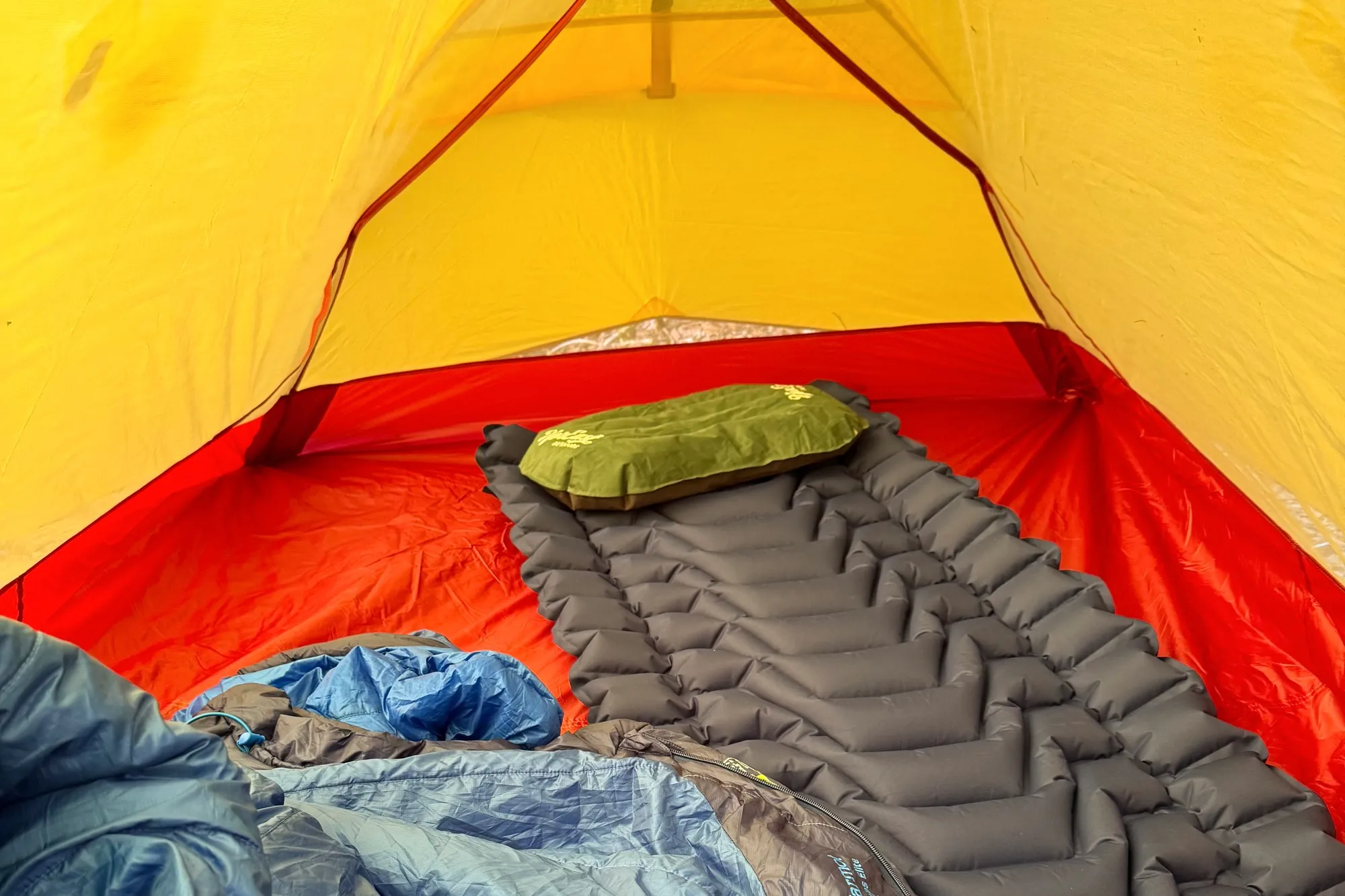
A winter camping trip requires a little more thought and planning than your average summer outing. If you’re heading out and want to know how to stay warm in a tent, this guide will get you through those freezing nights without being miserable the entire time. That means the right bag, the pad under you, your layers, and where you pitch.
Buy a bag rated colder than you think you need
Shop by the tested comfort rating, not the number in the bag’s name. A bag marketed as “30 degrees” is often only truly comfortable into the 30s, so if you expect a night near freezing, you want a bag rated well below that. My own bag is a Marmot Trestles Elite Eco 30, comfort rated to 32°F with a limit rating of 21°F, which shows the gap: the name says 30, the number you can actually trust is higher. My long version weighs 1,150 g, and you can see how it compares to the rest of my gear in my weight table.
Don’t skip the pad
An insulated pad matters as much as the bag, because the ground pulls heat out of you faster than cold air does. A warm bag on a thin pad still leaves you cold from underneath. I normally use a Klymit Static V, which I’ve reviewed here, and it’s fine for three-season trips. For real winter use I’m looking at a Therm-a-Rest NeoAir XLite instead, since the Klymit’s R-value isn’t built for that.
Layer up, starting with a merino base
Start cold nights in a merino wool base layer, top, bottom, and socks, then add warmth from there depending on how cold it actually gets. I’ll add a microgrid fleece, a beanie, or a thicker sweatshirt on top of my base layer as needed.
Plan differently for car camping vs backpacking
How much you can do about the cold depends on which kind of trip it is. For car camping you can pack a lot of extra blankets and layers without having to worry about the weight. For backpacking you don’t want to be lugging a lot of weight up a mountain, so the sleeping bag and pad have to do more of the work, and lighter but warmer layers will help out a bunch.
Use a hot water bottle to warm the bag fast
Fill a wide-mouth bottle with boiling water and drop it into your sleeping bag before you get in. It heats the bag fast and keeps it warm for hours. I use a Nalgene for this and it works well every time. Hand warmers are a solid backup if boiling water isn’t an option at camp.
Pick your tent site for warmth
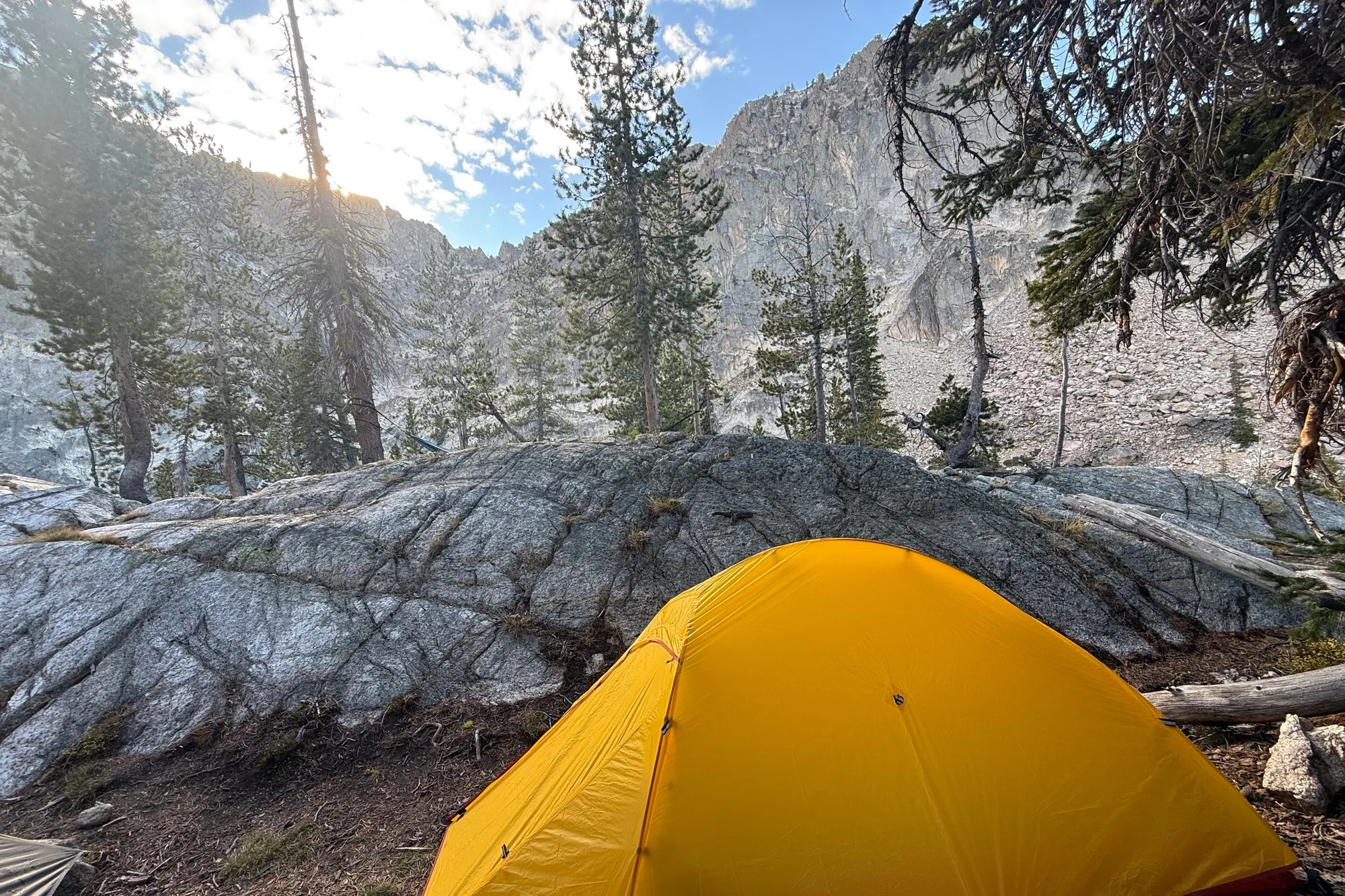
Pitch higher up and away from water when it’s cold, since cold air sinks and settles into low spots near water. Getting out of the wind matters just as much. Wind cuts through a tent far faster than still cold air does, especially if the tent isn’t a great wind block to begin with.
Seal the tent up, or crack a vent
Sealing the tent traps more warm air but increases condensation on the walls. Cracking a vent cuts down on that condensation at a small cost in warmth. On less windy nights I’ll crack a vent; on the coldest nights I seal mine up completely and deal with the condensation instead, because I’d rather have a damp tent wall than wake up cold.
How to Stay Warm in a Tent FAQ
What temperature rating sleeping bag do I need for camping? Pick a bag rated at least 10 degrees colder than the lowest temperature you expect, and go by its tested comfort rating, not the number in the name. A bag named for 30 degrees is often only truly comfortable a bit above that.
Does a sleeping pad actually matter for staying warm? Yes. The ground conducts heat away from your body faster than the air does, so an insulated pad does as much work as the bag itself. A warm bag on a thin pad still leaves you cold from underneath.
What’s a fast way to warm up a cold sleeping bag? Fill a wide-mouth bottle with boiling water and put it in the bag before you get in. It heats the inside of the bag fast and stays warm for a long time. Hand warmers work too if you don’t have a way to boil water.
Is it warmer to car camp or backpack in cold weather? Car camping is easier to stay warm in, since you can pack extra blankets and layers without worrying about weight. Backpacking means your bag, pad, and clothing layers have to carry more of that load on their own.
Should I leave a vent open in my tent when it’s cold? Sealing the tent traps more heat but increases condensation on the walls. Cracking a vent cuts down on that condensation at a small cost in warmth. On less windy nights I’ll vent it; on the coldest nights I seal it up and deal with the condensation instead.