How to Keep Food Cold While Camping (Up to 4 Days on Ice)
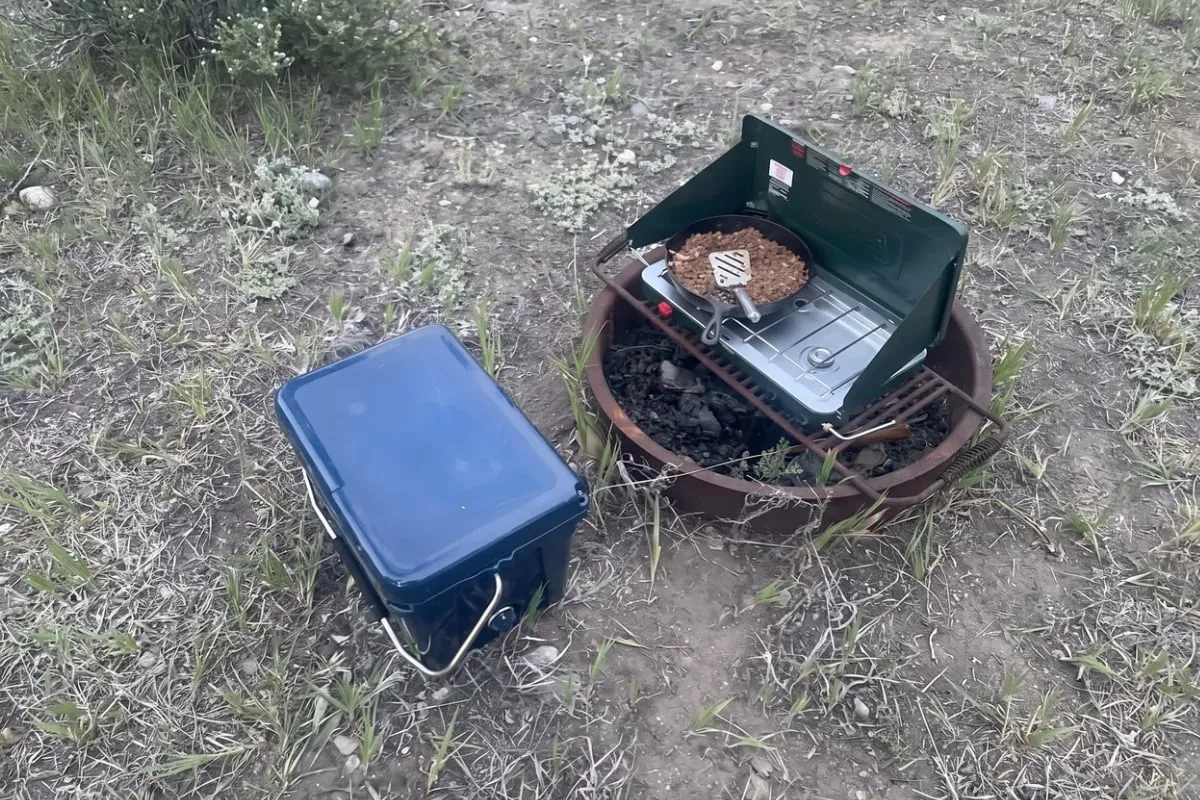
To keep food cold while camping, pre-chill your cooler, pack it with bagged ice on the bottom and the top, tuck frozen meat in with the food to work as an extra ice pack, keep the lid shut, and drain the meltwater so nothing gets soggy. In a good hard cooler that gets me about three days easy, and four if I’m careful. Here’s the exact setup I use.
The short version
- Pre-chill the cooler a couple hours before you leave.
- Pack ice in bags, on the bottom and the top.
- Freeze your meat solid and let it thaw in the cooler as extra ice.
- Keep drinks in a second cooler so you’re not opening the food one.
- Keep it in the shade, and keep it shut.
- Drain the water as the ice melts so your food stays dry.
Start with a cold cooler
A warm cooler burns through your first bag of ice just cooling its own walls. So a couple hours before I leave, I throw a bunch of ice packs in to bring the inside temperature down, then pull them out and load it with fresh ice when I’m ready to go. Ten minutes of prep buys you the better part of a day.
Use bagged ice, and drain it
I use regular bags of ice, not block ice. Bagged ice is easy to wedge in around the food so there are no warm gaps, and when it melts I drain the water off so everything isn’t sitting in a cold puddle. If I don’t want things getting wet at all, I’ll split the ice into zip bags and pack those around the food instead.
Block ice does last longer if you can get it, since it melts slower than cubed. I just find bags easier to pack tight and drain, and packing it tight matters more than the shape of the ice.
The one time I skip bags and pour ice straight in is a drinks-only cooler, where a few wet cans are no big deal.
Freeze your meat and let it work as ice
This is the trick I lean on most. I freeze the meat solid before the trip and pack it in with the food. It thaws slowly over the first day or two and acts like an extra ice pack the whole time, so instead of spending ice to keep the meat cold, the meat is keeping everything else cold. By the time I want to cook it, it’s thawed, and the cooler stayed colder the whole way there.
Ice on the bottom and the top
Cold sinks, so a layer of ice only on the bottom leaves the top of your food warm. I pack bagged ice on the bottom, load the food, then put more bagged ice on top. Food in the cold middle, ice above and below.
Give drinks their own cooler
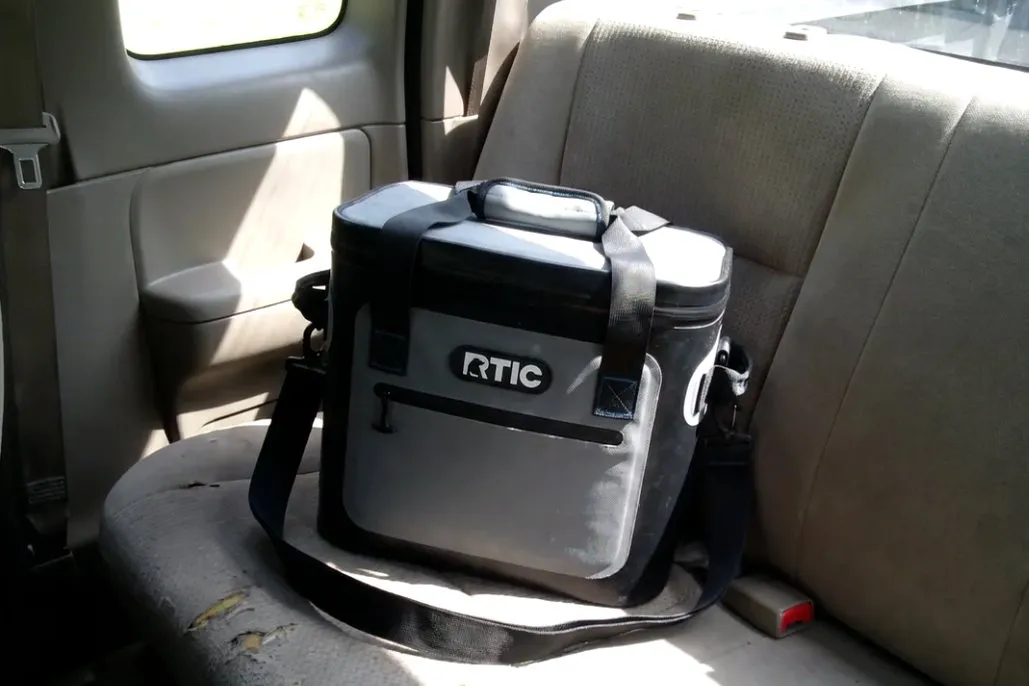
The fastest way to warm up a cooler is opening it. Every time you dig for a drink, the cold air falls out. So when I can, I bring the soft cooler just for drinks and leave the food cooler shut. Drinks get grabbed twenty times a day, food maybe three. Keep them apart and the food cooler holds cold a lot longer. It’s the main reason I want a second hard cooler.
Keep it in the shade, and keep it shut
At camp mine usually sits in the shade by the truck, and it doubles as a seat half the time. The main thing is keeping it out of direct sun, since a cooler in full sun or a hot car loses ice fast. If your site has no shade, throw a wet towel over the lid and the evaporation keeps it a few degrees cooler. And open it as little as you can.
How long it actually lasts
The longest I’ve kept food properly cold was four days, and it was getting really close to warm at that point. Three days is really the longest I’ll go before getting more ice. So on a longer trip I pack a couple days of food and plan to resupply or hit a town before that fourth day.
That three-day window is really about the cooler. A good hard cooler is what makes it possible, and if you’re picking between hard and soft, I broke it down in my hard cooler vs soft cooler guide.
When to skip ice: electric coolers
If you can swing it, I’d get an electric cooler. Those things are really cool, no ice at all, and some of them even work as a freezer. You plug it in and it holds temperature, so you skip the whole ice routine. They cost a lot more than a cooler and a couple bags of ice, but if you camp out of a truck or van a lot, it’s the upgrade I’d point you at. The one I’d send people to is the Dometic CFX2 28L, it plugs into your car, a wall outlet, or a solar setup, needs no ice, and you can set it as a fridge or a freezer.
Yetis are great too if you’d rather spend up on a regular cooler. They’re built like tanks. Just know a Yeti still needs ice like any other cooler, so it won’t hold cold any longer than a well-packed RTIC.
How to keep food cold camping FAQ
How do you keep food cold while camping without electricity? Pre-chill a hard cooler, then pack it with ice in bags on the bottom and top and add frozen food like meat or water bottles for extra cold. Keep it shaded, keep the lid shut, and drain the meltwater. That holds food cold for around three days.
How long will food stay cold in a cooler? In a good hard cooler, about three days, and up to four if you pre-chill it, pack it full, and keep it out of the sun. A soft cooler is more like a day. Cheap coolers, less.
Is block ice or cubed ice better for camping? Block ice lasts longer because it melts slower. Bagged or cubed ice is easier to wedge tightly around your food and drain as it goes. I use bags for that reason, but a block on the bottom with bagged ice around the food is a solid combo.
Should you drain the water from a cooler? I drain it so my food isn’t sitting in a puddle. Some people leave it, since cold water still keeps things cold, but if your food isn’t in waterproof bags, draining keeps it from getting soggy.
Do you need an electric cooler? No. A good hard cooler and ice will get you three or four days. But if you camp out of a vehicle a lot and don’t want to deal with ice, an electric cooler is worth it, and some even work as a freezer.