Portable Power Station for Camping: My Cheap 4-Day Setup
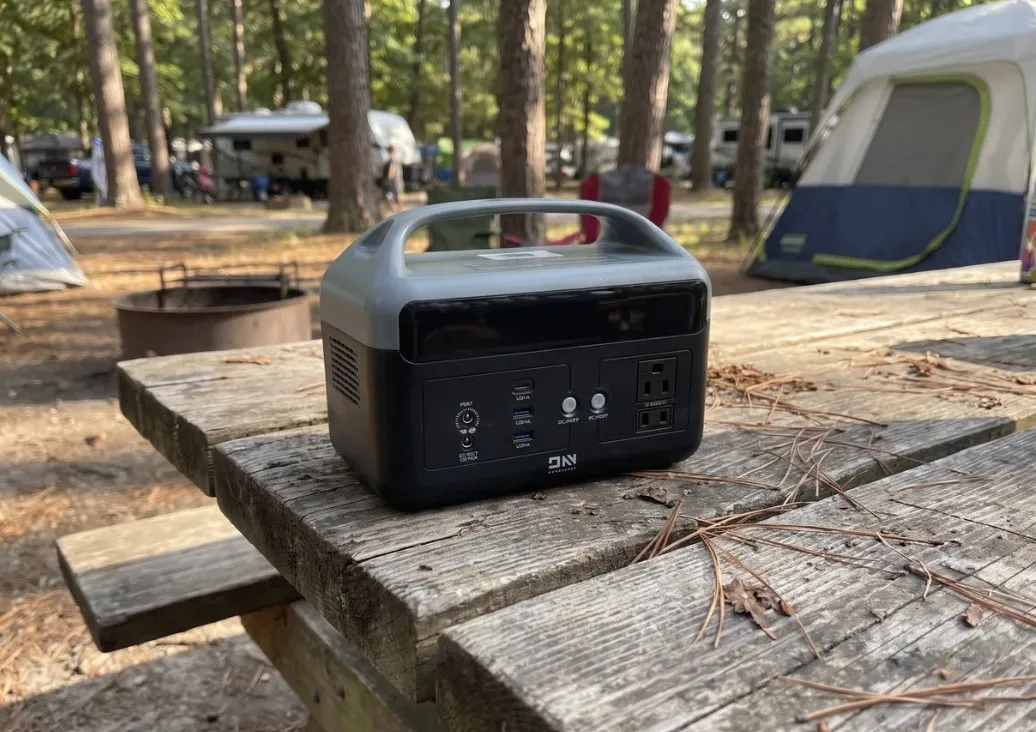
A portable power station for camping usually gets sold as an $800 model with a solar panel to match. For how most people camp, that’s overkill. I got through a four-day trip on a cheap little power station, kept a whole group’s phones and my GoPro camera topped off, and never once wished I’d spent more. Here’s the setup.
Reasons to buy
- Budget friendly
- Charges the whole group
- Plenty of ports
- One-hand carry
- LiFePO4 battery
Reasons to avoid
- Only 300 W
- No solar included
The one piece of gear
I’ve got a Daranener power station I grabbed on a major Prime Day sale. It’s an entry-level unit, rated to 300 watts, so it won’t run a fridge or a power tool, but it will keep every phone and camera in your group alive for days. I just got it, so I’m still putting it through its paces, but the early read is good: strong reviews, and it did exactly what I needed on a four-day trip.
The ports are what matter. It’s got a USB-C, two USB-A, a 12V DC output, and a real 120V AC wall outlet. That’s enough to charge pretty much everyone in your group’s phones plus my GoPro without playing musical chairs with a single cable. It also has a handle and it’s not heavy, which matters more than you’d think. A station you can grab with one hand is one you’ll actually reach for.
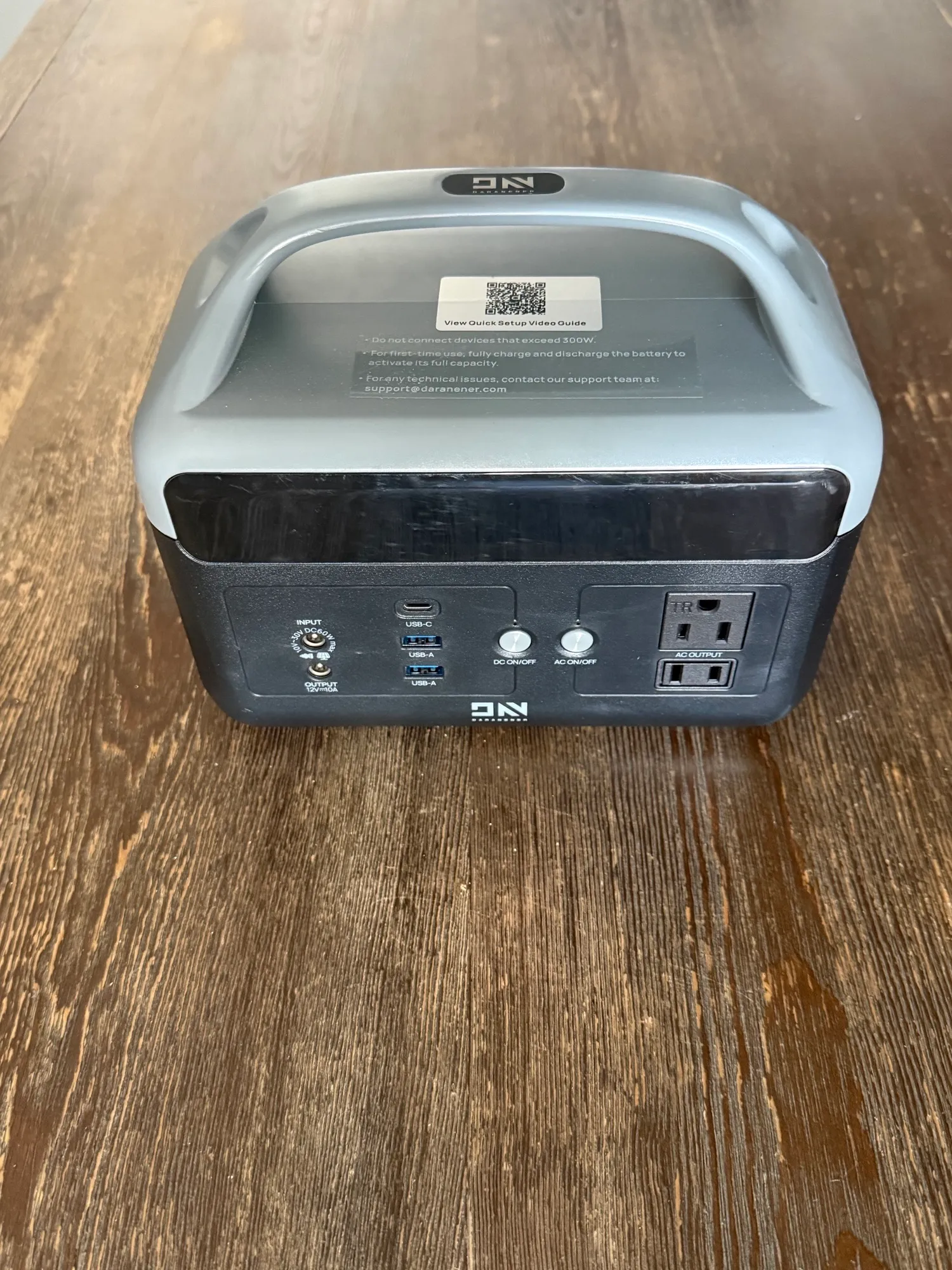
Daranener NEO 300L specs at a glance
| Spec | Detail |
|---|---|
| Output | 300 W |
| Capacity | 288 Wh |
| Battery | LiFePO4 |
| Ports | USB-C, two USB-A, 12V DC, 120V AC outlet |
| Recharge | Wall or solar (panel optional) |
| Best for | Keeping a group’s phones and a camera charged at camp |
Keeping a camera charged at camp
A camera is the reason I keep a power station instead of just a power bank. I have a GoPro Hero 11 and usually charge a couple of other phones as well, so three devices over a trip. The GoPro plugs straight into the station’s USB, no separate battery charger.
My routine is simple: I carry two GoPro batteries and charge both at home before I leave, so at camp I’m just charging one a day at most. On that four-day trip I had to recharge two, and that plus keeping the phones alive is about all this 288 Wh station can carry. It ran dry on the last day, but only after everyone was already charged up. So for a GoPro and a couple of phones over a long weekend, a budget station like this is enough, without a lot to spare.
Cold nights drain batteries faster, the camera’s and the station’s both. If it’s cold, keep them in the car or throw them in your sleeping bag overnight so they hold the charge.
The charging habit that makes it last
The single most useful thing I’ve learned: don’t leave devices charging off it overnight. That drains the station fast, and you don’t need a phone sitting at 100% while you’re asleep. Instead, top things up in short windows, in the morning while you’re getting ready, at night right before bed, or on the drive to the trailhead. Same full battery when you need it, a fraction of the drain on the station.
Do that and a small station stretches across a long weekend easily.
The two-bank trick for day hikes
The station stays at camp or in the truck, because it’s too much to haul up a trail. So before a long day hike, I top off my little Anker power bank from it and throw the Anker in my day pack. The station holds the charge, the Anker comes with me. It’s a cheap way to stop worrying about your phone dying five miles from the car.
What about solar?
Mine can take a solar panel, and I like having that option, but I haven’t bought one yet because I’ve never been on a trip where I’d have needed it. Wall-charging it full before every trip has covered everything so far. My take: skip the panel until you’ve actually run the station dry on a trip. Buy it to solve a problem you’ve had, not one you’re imagining.
Would I buy it again?
So far, yes. It’s early days, but for weekend and long-weekend camping it’s been the right amount of power without the flagship price tag. If you camp off a vehicle and mostly need to keep phones and a camera alive, a budget station like this is very likely all you need.
Camera power FAQ
How do you keep a camera charged while camping? Run it off a portable power station. I plug a GoPro Hero 11 straight into a budget 300 W station and top off spare batteries as I go. Carry two batteries charged from home and you’ll rarely charge more than one a day.
What size power station do you need for a camera and phones? For a GoPro and a couple of phones over a long weekend, a 288 Wh station is enough. On a four-day trip mine kept a GoPro and two phones going and ran dry on the last day, so that size is about the ceiling.
Do you need a solar panel to keep a camera charged camping? Not for a weekend. I wall-charge the station full before every trip and have never needed a panel. Add solar only if you routinely run the station dry on longer trips.